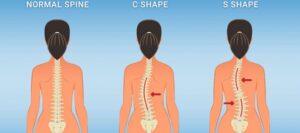

Scoliosis is far more complex than a simple side-to-side curvature of the spine. It is a three-dimensional structural condition where the spine twists, bends, and rotates out of its natural alignment. No two spines are identical, and scoliosis varies significantly based on its underlying root cause (etiology), the age of onset, and the exact anatomical location of the curve. Understanding the specific type of curve you or your loved one has is the foundational first step toward effective long-term management.
Catching a spinal curve early especially during periods of rapid skeletal growth or early adult degeneration is critical for preventing curve progression. Early identification allows healthcare professionals to intervene before structural changes become rigid. Implementing targeted scoliosis physiotherapy in the early stages helps maintain spinal flexibility, strengthens surrounding musculature, and reduces the need for invasive surgical interventions later in life.
If you notice visual signs of spinal asymmetry, such as uneven shoulders, a prominent shoulder blade, or leaning to one side, do not wait. Getting a professional physical assessment from a certified physotherapist specializing in physiotherapy or visiting a reputable physiotherapy near you in Puchong ensures an accurate clinical diagnosis, Cobb angle measurement, and customized treatment strategy.
Scoliosis is not a single, uniform condition. It refers to a three-dimensional spinal curvature that can develop at different life stages and for different underlying medical reasons.
Understanding the specific category of scoliosis is essential for establishing appropriate clinical management strategies.
Type of Scoliosis | Key Characteristics |
1. Idiopathic Scoliosis | • Most common type (~80% of all cases) • No single known origin cause • Frequently develops during pubertal growth spurts (Adolescent Idiopathic Scoliosis – AIS) |
2. Congenital Scoliosis | • Present from birth • Caused by incomplete vertebral formation or segmentation during embryonic growth |
3. Neuromuscular Scoliosis | • Associated with underlying neurological or muscular conditions (e.g., Cerebral Palsy, Muscular Dystrophy) • Relates to altered trunk muscle control and support |
4. Degenerative Scoliosis | • Develops later in adulthood • Associated with age-related spinal disc wear and facet joint structural changes |
Note: Scheuermann’s Kyphosis involves increased forward curvature (rounding) of the upper spine due to wedge-shaped vertebrae. It is a distinct structural condition and not a form of scoliosis.
In addition to its cause, scoliosis is classified by where the primary curve develops along the spinal column:
Thoracic Scoliosis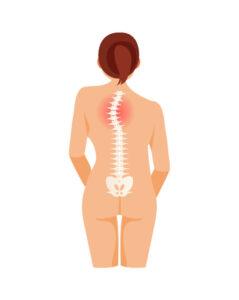
The curve occurs in the middle back (thoracic region), which houses the rib cage. Because the ribs rotate along with the vertebrae, thoracic scoliosis frequently causes a noticeable “rib hump” when bending forward, uneven shoulder heights, and asymmetrical shoulder blades.
Lumbar Scoliosis
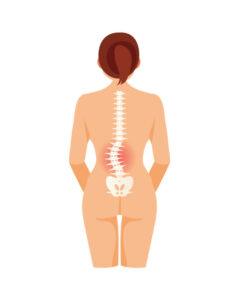
Located in the lower back (lumbar region), this curve directly impacts pelvic alignment. It commonly leads to uneven hip levels, an asymmetrical waistline, and the illusion that one leg is longer than the other, which alters a person’s natural walking gait.
Thoracolumbar Scoliosis
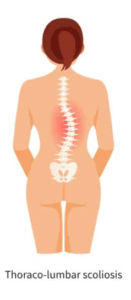
This curve spans the junction where the upper-mid back meets the lower back (between the T12 and L1 vertebrae). It is a long, continuous curve frequently observed in both idiopathic and neuromuscular scoliosis cases, affecting both chest symmetry and hip alignment.
Double Major Curve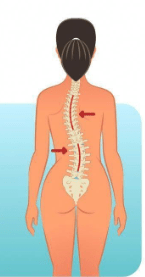
A double major curve is a type of scoliosis where the spine has two significant structural curves, usually one in the thoracic region and another in the lumbar region. The curves bend in opposite directions and help the body maintain overall balance.
Managing scoliosis requires an active, exercise-based approach. Utilizing specialized techniques from sports physiotherapy, clinicians guide patients through targeted asymmetrical core exercises, Schroth-based derotation breathing, and spinal elongation movements. These exercises build deep intrinsic muscle strength, balancing muscle tone on both sides of the spine to slow down curve progression naturally.
A curved spine forces surrounding muscles, ligaments, and nerves to work overtime to keep the body upright. Over time, this leads to chronic muscle fatigue, joint inflammation, and localized nerve compression. Dedicated physical therapy restores proper biomechanics, releases overactive muscle groups, and corrects pelvic tilt to relieve persistent discomfort without relying solely on pain medication.
Physiotherapy does not promise to “straighten” a structural curve. Instead, clinical care focuses on:
Receiving a scoliosis diagnosis can feel overwhelming, but understanding your specific condition and curve pattern empowers you to take proactive control of your body. With the right guidance, targeted exercise, and proper care, living a full, active, and pain-free life is entirely achievable.
If you suspect spinal curvature, suffer from persistent back fatigue, or are searching for an expert physiotherapy near you in Puchong, we are here to support your recovery journey. Book a comprehensive spinal assessment with Wai Physio today to get a personalized scoliosis rehabilitation plan tailored to your spine!