

Receiving a scoliosis diagnosis often leads to uncertainty about physical activity. Patients and parents frequently ask: “Can I still run?” “Can I lift weights?” “Will exercise make my curve worse?”
For the vast majority of people, scoliosis does not mean you must stop being active. Maintaining regular physical exercise is crucial for long-term spinal support, bone density, mental health, and physical confidence.
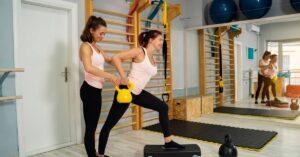
MYTH 1: “You must avoid all asymmetrical sports like tennis or badminton.”
FACT: Sports like tennis, badminton, squash, and pickleball naturally involve asymmetrical movements. Having scoliosis does not automatically rule you out from enjoying court sports or racquets.
MYTH 2: “Core strength will completely straighten the spine.”
FACT: Core exercises build functional strength, stamina, and trunk control, but they do not eliminate structural bone curves. The goal of training is improved function, stamina, and reduced fatigue.
MYTH 3: “You must hold ‘perfect posture’ at all times.”
FACT: Holding a rigid posture all day leads to muscular exhaustion. Movement variety and regular position shifts are far healthier for your spine than standing rigidly.
Movement is medicine when executed with proper form and control. Engaging in structured scoliosis physiotherapy strengthens the deep stabilizing muscles supporting your vertebral column, improves postural awareness, and significantly reduces daily discomfort. Rather than restricting your lifestyle, active rehabilitation utilizes specialized derotation and elongation techniques to stabilize your spinal curve, protect your intervertebral discs, and allow you to continue participating in the physical activities you love.
Because no two spinal curves are identical, generic workout routines can do more harm than good. Getting a comprehensive physical assessment from a certified professional is a crucial first step. Seeking out specialized fisioterapi services or booking a session for a physiotherapy near me ensures that your exercise plan is custom-tailored to your specific Cobb angle, curve direction, and personal fitness goals.
Sitting or standing in a static posture for prolonged periods creates asymmetric mechanical stress on your spinal ligaments and surrounding musculature. Over time, this static tension causes severe muscle fatigue and often leads to deep, aching buttock pain due to pressure on the piriformis muscle and sciatic nerve pathways. Make it a habit to shift your weight, stand up, and stretch every 30 to 45 minutes to relieve intra-discal pressure and keep your circulation flowing.
Focus your workouts on stabilization, elongation, and asymmetrical balancing exercises designed specifically for your curve pattern. Incorporating proven techniques from sports physiotherapy helps retrain your nervous system to engage underactive muscles on the convex side of your curve while releasing tight, overworked muscles on the concave side, preventing the stronger side from pulling your spine further out of alignment.
Decompressing your spine on a daily basis is essential for combating gravity’s constant downward pull. Simple, controlled movements like passive hanging from a pull-up bar allow gravity to gently elongate your torso, open up compressed intervertebral spaces, and relieve nerve impingement without placing structural strain on your joints.
A powerful muscular core acts as an internal brace for your entire trunk. Deep core activation exercises targeting the transverse abdominis, multifidus, and pelvic floor help stabilize the pelvis and support the spinal column. This structural support prevents compensatory postural issues like lower cross syndrome, a common musculoskeletal imbalance where tight hip flexors and lumbar extensors cause a pronounced anterior pelvic tilt, leading to weakened gluteal and abdominal muscles.
Carrying unbalanced loads forces your spine to twist and bend unnaturally to keep you upright. Avoid habits like carrying heavy single-strap shoulder bags, holding groceries consistently on one side of your body, or standing with all your body weight shifted onto a single leg. These repetitive asymmetrical strains deepen existing postural deviations and accelerate uneven joint wear.
Avoiding Torso Extension & Hyperextension
Steer clear of exercises and stretches that force your spine into extreme backward arching. Hyperextending your torso increases compressive stress on the posterior facet joints of your vertebrae and can worsen the three-dimensional rotation of your scoliosis curve, increasing the risk of facet joint inflammation and localized spinal pain.
High-impact physical activities generate repetitive downward shockwaves that travel directly up your legs and into your spinal column. Running long distances on hard concrete surfaces in unsupportive shoes or performing repetitive plyometric jumping exercises places excessive compressive forces on your intervertebral discs, increasing the likelihood of disc bulges and structural irritation.
Walking is one of the safest, most accessible, and most effective low-impact exercises available for spinal health. It promotes cardiovascular fitness and encourages natural, gentle reciprocal motion between the shoulders and pelvis without subjecting the spine to harsh impacts. You can easily adjust your pace and terrain to match your energy levels and comfort.
Symmetrical core exercises like standard front planks, bird-dog extensions, and side planks force your core muscles to fire evenly on both sides of your body. These isometric holds build deep endurance and reinforce spinal stability without requiring dangerous twisting, bending, or excessive spinal motion.
Because scoliosis affects your body in three dimensions, side-to-side curvature, front-to-back alteration, and vertebral rotation generic gym routines fall short. Working with a dedicated physio center offering specialized physiotherapy ensures that every stretch, exercise, and movement in your routine is precision-engineered for your specific curve profile to maximize spinal stabilization and long-term relief.
Not all physical activities are suitable when managing a curved spine. Certain sports put excessive strain on your back, increase vertical compression, or worsen spinal rotation. Here are the main activities to avoid:
Consult a physiotherapist specialized in spinal rehabilitation if you experience persistent back discomfort, progressive joint stiffness, difficulty returning to your preferred sport, or post-surgical movement limitations.
Having scoliosis should never prevent you from enjoying an active, healthy life. Understanding which movements protect your spine and which exercises to avoid gives you full control over your recovery and fitness journey.
If you are looking for an expert physiotherapy near you in Puchong, searching for experienced physio care, or need top-rated physiotherapy specialists, we are here to help. Book a comprehensive assessment with Wai Physio today to get a personalized scoliosis rehabilitation and spine care plan tailored to your body!